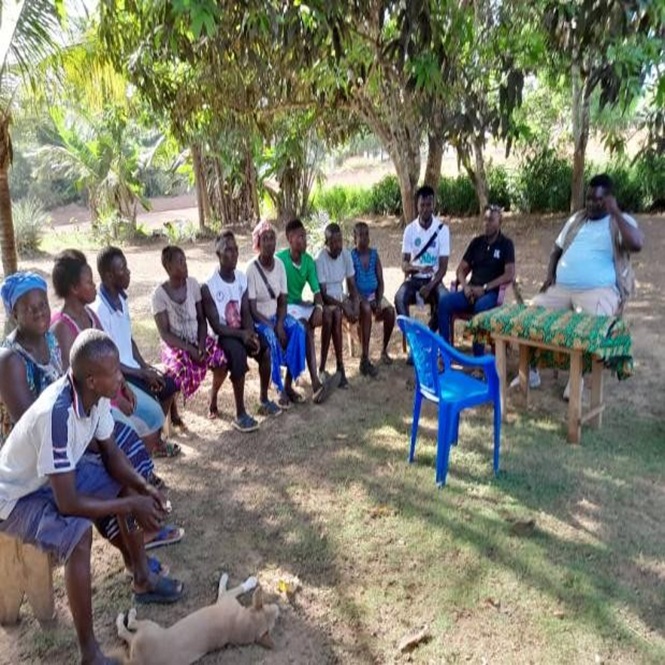
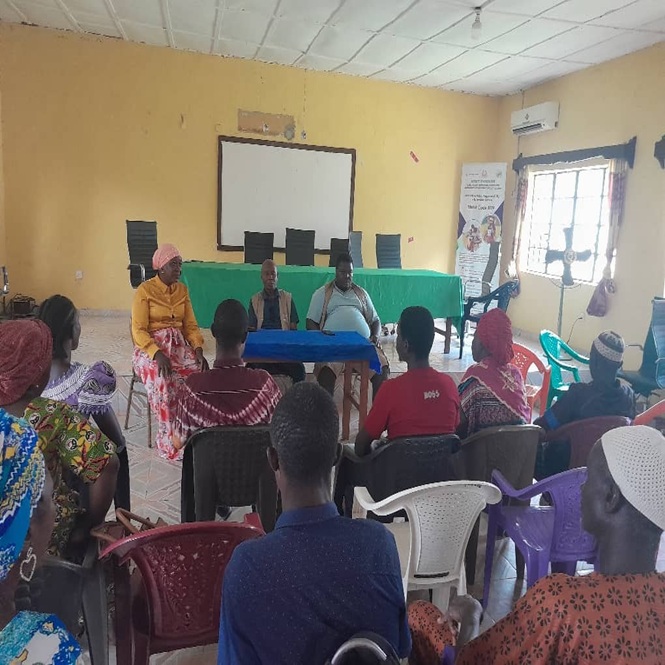
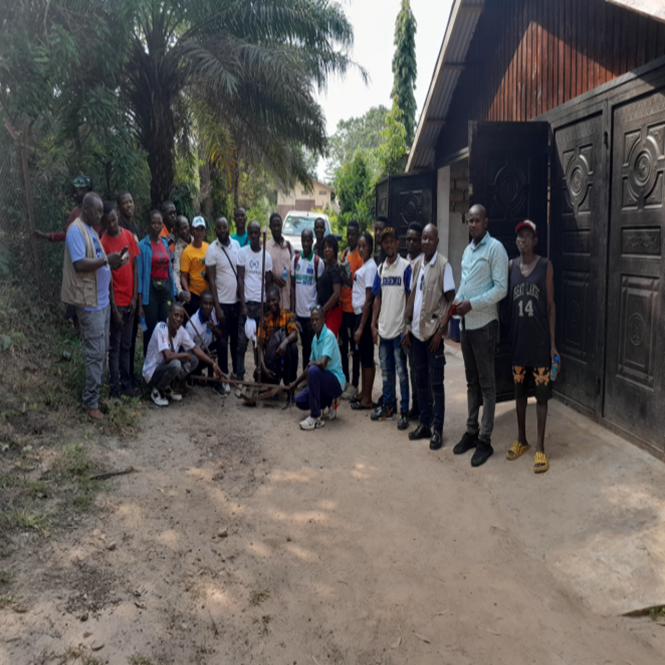
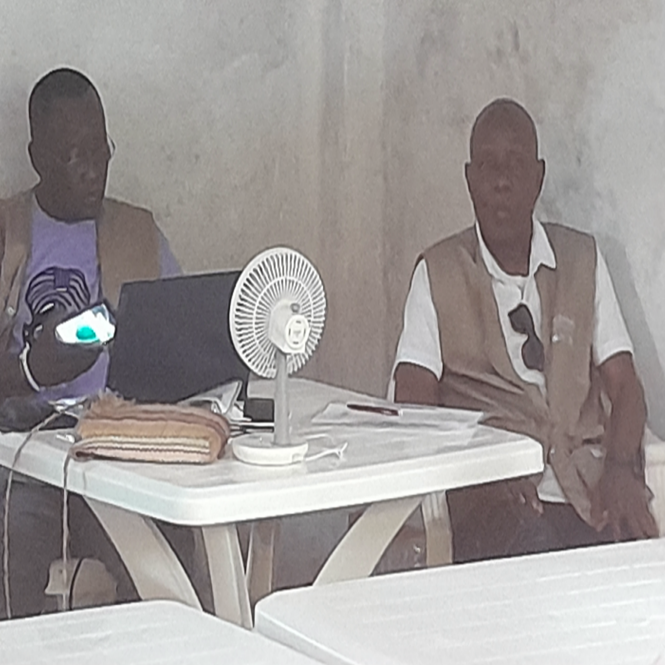
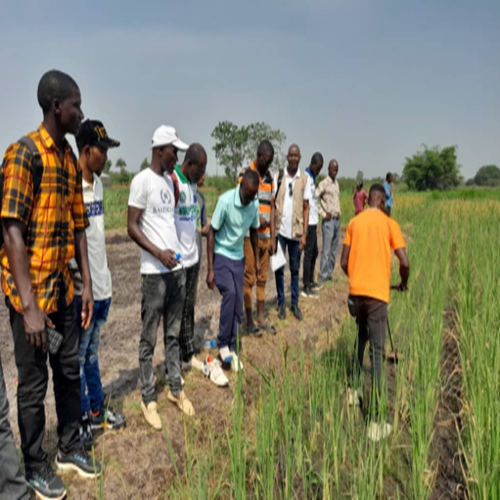
(Farmer outreach program and Training Workshop-Dec.2024)
The RICOWAS project in a concerted effort to revolutionize rice production, empower local farmers, and promote sustainable agriculture in Sierra Leone, the Sierra Leone Agricultural Research Institute (SLARI), which is the national executing entity with funding from the Adaptation Fund (AF) and implemented by the Sahara and Sahel Observatory (OSS), undertook strategic interventions and innovative practices such as the establishment of PPPs for the empowerment of smallholder rice farmers with equipment through an extensive farmer outreach programto create awareness about the availability and benefits of the innovative equipment and also provide training and capacity-building initiatives to farmers on proper equipment usage, maintenance, and troubleshooting.
The project activity focuses on generating Public-Private Partnership (PPP) aimed at the development and supply of innovative agricultural equipment and their provision to farmers. These include items such as mechanical weeders (Mandava and Conor), rice transplanters, rice thresher, small milling machine and improve rice par boiler, among others that have been identified during SRI-WAAPP.
One of the main objectives of this activity is to support the selected private sector (Sainth Joseph Technical Institute/Sulmoore Welding and Fabrication) in producing machinery and equipment that aligns with System of Rice Intensification (SRI) practices as we aim to improve farmers’ access to appropriate machinery at competitive prices, thereby enhancing their productivity and efficiency.
By so doing will
Strengthen the resilience and capacity of smallholder rice farmers and other actors in the rice sector by enabling them to use sustainable agro-ecological land and water management strategies that respond to climate change threats in their respective localities.
Help farmers implement and improve CRRP, using the System of Rice Intensification (SRI) method and locally adapted soil and water conservation management approaches.
Also, under the same activity, local artisans, mechanics and equipment operators have been trained at the Sainth Joseph Technical Institute/Sulmoore Welding in Lunsar. This is an already identified and selected as one of the PPPs under activity 2.2.1.1 (Establish networks and create partnerships between private companies and producer cooperatives) for the supply of equipment and Tools. SLARI and CNS-RIZ will play a facilitating role in ensuring that appropriate equipment is disseminated in sufficient numbers to the rice farming communities for better ownership and sustainability. Building on the SRI-WAAPP project experience, RICOWAS will engage with Sainth Joseph Technical Institute and Sulmoore Welding and Fabrication to support their role in producing sufficient numbers of new equipment (weeders, seeders etc) adapted to SRI.
Jn view of this SLARI, the national executing entity (NEE) carried out the following sub-activities under main activity 2.2.1.2 (Generate PPP for the development and supply of innovative agricultural equipment and their provision to farmers)
– Farmer outreach programto create awareness about the availability and benefits of the innovative equipment.
SLARI scientists carried out an extensive farmer outreach sensitization program across project zones to create awareness about the fabrication of the equipment and tools and about the benefits of the innovative equipment. 10 farmers, who are lead farmers from farmers-based organizations (FBOs), were selected.
Conduct training programs for artisans, equipment operators, mechanics and farmers on the use of the new equipment.
The workshop trainings were held on the 4th and 5th December 2024 for the Eastern and Southern regions and on the 11th and 12th December 2024 for the Northern and North-West regions at Mapity Farming Enterprise in Lunsar.
Mr. Gerald D Aruna, the facilitator and SRI-CRRP Master trainer of Mapity Farming Enterprise and Mr. Sulaiman Bah, Welder and Fabricator during the opening session expressed their deep gratitude to the Adaptation Fund and the Sahara and Sahel Observatory for their steadfast support.
According to the project coordinator, Mr. Samuel Soki Harding, he said that equipment and tools that improve CRRP labor productivity and reduce the drudgery of rice field work have been identified and tested. Also, local artisans, mechanics and equipment operators have been trained. He said SLARI and the regional body based in Mali will play a facilitating role in ensuring that appropriate equipment is disseminated in sufficient numbers to the rice farming communities in Sierra Leone. He further iterated that for better ownership and sustainability; the equipment needs to be produced by local operators.
The RICOWAS project will support cooperatives and farmers to acquire the appropriate equipment such as mechanical weeders, marking rakes, levelling bars, seeders, and transplanters. Building on the SRI-WAAPP project experience, the RICOWAS project will engage with local enterprises such the Sainth Joseph Technical Institute and Sulmoore Welding and Fabrication, that has already been identified to support their role in producing enough new equipment (weeders, seeders) adapted to SRI, and to distribute them to farmers across the country.
According to Mr. Harding he said the significance of the activity that the RICOWAS Project aims to address critical challenges faced by smallholder farmers in Sierra Leone’s rice production industry, including cultivation and marketing. By integrating innovative agricultural practices and equipment, the project will enhance productivity, reduce labor drudgery, and empower local communities to achieve sustainable rice production and concluded by saying that the initiative represents a pivotal
step toward modernizing Sierra Leone’s rice production sector, ensuring food security, and improving the livelihoods of smallholder farmers.
Class and Field Practical on the use of the Markers and Weeders
Participants during the training were told about the benefits of the innovative equipment and taught also about equipment usage, their maintenance, and troubleshooting.

 +232 88 208402