IMPLEMENTATION
The activity will be carried out under Output 1.2.3 that is extension institutions involved in the development and dissemination of SRI-CRRP strengthened. This can be achieved through training of extension workers. Agriculture extension institutions play a key role in the RICOWAS project. They will be in charge of directly training and technically assisting the project beneficiaries across the project zones in the country. It is therefore critical for the RICOWAS project to engage and support the government extension institutions, NGOs and farmer associations to undertake technically rigorous, thematically appropriate and practice-relevant ToT workshops at the national level in years one and two.
Approach
The national ToTs will be organized by the SLARI during the first year of the project, the ToT workshop will focus on SRI methodologies and practices. The subsequent workshops will focus on the integration of best practice in soil, water, and crop pest and disease management according to climate zones and rice systems.
As a result, the RICOWAS project in Sierra Leone will adopt a comprehensive approach known as the Climate-Resilient Rice Production (CRRP), which is uniquely developed for this project. CRRP will be based on the SRI methodology in combination with location-specific Sustainable Land and Water Management (SLWM) practices, and if calls for, Integrated Pest Management (IPM).
The foundation for climate-resilient rice systems lies in Integrated Soil and Water Management (ISWM), keeping soils structurally intact and improving them with organic matter. The technical methods used will vary depending on the constraints and opportunities, and on the different climate zones and rice production systems. To be able to respond efficiently to the different conditions, the project will use a modular approach for capacity strengthening and field implementation for extension institutions involved in the development and dissemination of SRI-CRRP.
Therefore, in the framework of RICOWAS project, it is critical to undertake Training-of-Trainer’s (ToT), on the principle and practices of SRI-CRRP. In the first year of the project, the ToTs workshop will focus on SRI and the introductory aspects of CRRP. The subsequent workshops will focus on the integration of best practices in soil, water, and crop pest and disease management according to climate zones and rice systems. The following thematic areas will be taught in year 1 (one).
System of Rice Intensification (SRI)
Objectives
– Create in-depth understanding of SRI.
-Teach methodology to adapt principles and develop location specific best practices.
– Teach tracking methods for innovations.
Introduction to Improved Soil Management
Objectives
– Teach principles of good soil management.
– Identify and teach good soil management practices for each climate zone and rice system.
Introduction to Improved Water Management
Objectives
– Teach principles of good water management.
– Identify and teach good practices for each climate zone and rice system.
Introduction to Integrated Pest and Disease Management (IPM)
Objectives
– Teach principles of IPM for rice.
– Focus on specific pest and disease issues for each climate zone and rice system.
TRAINING/WORKSHOP OBJECTIVES
To engage and support the government extension institutions, NGOs and farmer associations to common understanding of the SRI/CRRP practices.
TRAINING OF TRAINERS WORKSHOP FOR SRI-CRRP IMPLEMENTATION
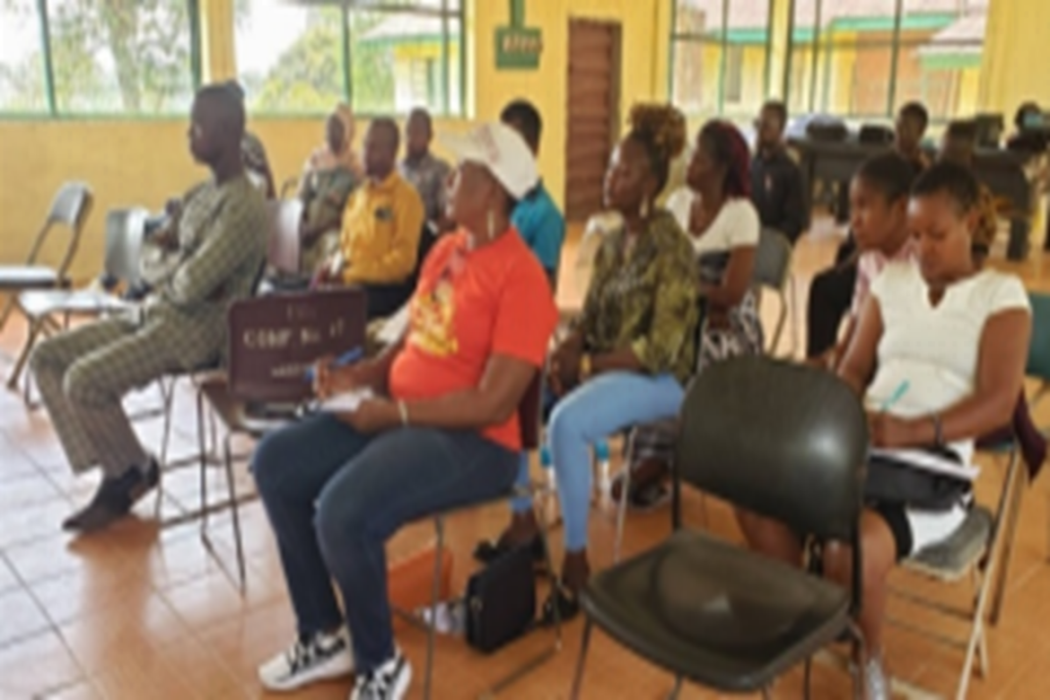
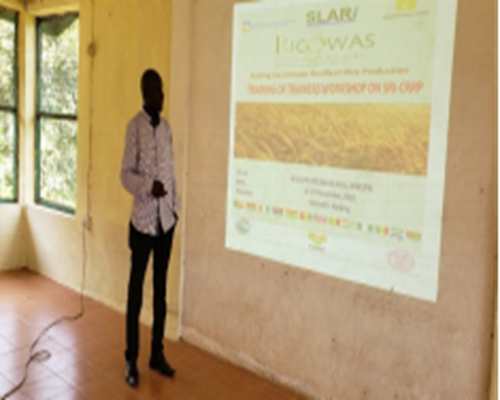
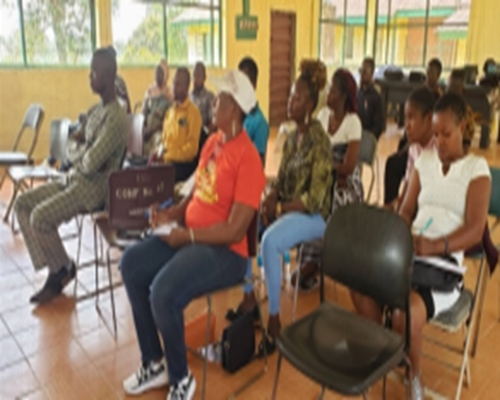
Empowering Agriculture: RICOWAS Project Kicks of Training of Trainers on System of Rice Intensification and Climate-Resilient Rice Production. In a significant stride towards sustainable agriculture and climate resilience, the RICOWAS project, funded by the Adaptation Fund and implemented by the Sahara and Sahel Observatory (OSS), has initiated a comprehensive training program. The focus for this year was on the System of Rice Intensification (SRI) principles and practices and on the introductory practices of CRRP and integrated pest management (IPM).
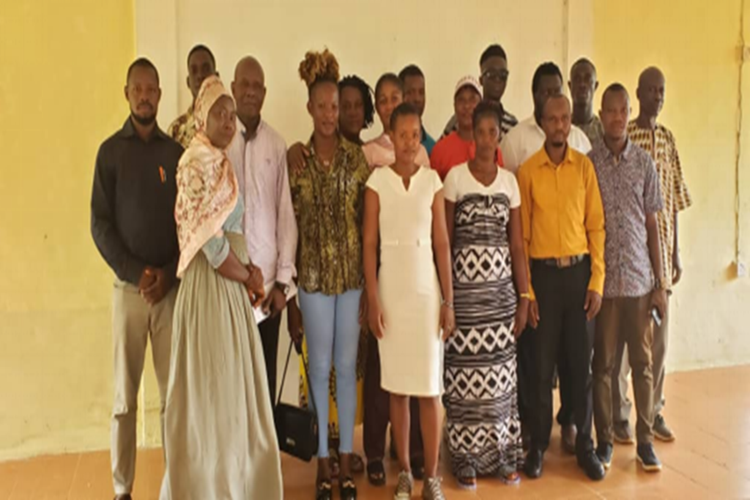
This transformative event, which kicked off at the Rokupr Agricultural Research Centre (RARC), runs from the 23rd to the 25th of November 2023. The training seeks to empower government extension institutions, NGOs, and farmer associations with the knowledge and tools necessary for successful project implementation. The RICOWAS project is been implemented in 10 districts across four provincial regions in Sierra Leone.
Each of the districts was represented by a government extension worker, carefully selected to participate in this training. This geographical inclusivity ensures that the knowledge and practices disseminated during the training will have a far-reaching impact, addressing the diverse agricultural landscapes within the project’s scope.
The overarching goal of this training initiative was to foster a unified understanding of SRI principles and practices among participants, who were mainly extension workers, researchers, NGO staff, and members of farmer associations.
According to the RICOWAS project Coordinator; Mr. Samuel S. Harding through a Power Point presentation, said that the training program was strategically crafted with the following key objectives in mind:
In-depth Understanding of SRI: Participants delved into the principles and practices of the methodology and gained a comprehensive understanding of its tropical context.
Adaptation Principles and Best Practices: The training equipped attendees with the skills to adapt SRI principles and develop location-specific best practices, ensuring the sustainability of rice production in diverse environments.
Tracking Methods for Innovation was also presented by the coordinator: The training equipped participants with effective tracking methods for innovation; ensuring that advancements in SRI/CRRP practices according to Coordinator, are not only implemented but also monitored for continuous improvement.
The anticipated outcomes of the Training of Trainers session were multi-faceted
Common Understanding
Extension workers, researchers, and other participants develop a shared comprehension of SRI/CRRP principles and practices, fostering collaboration and synergy in project implementation.
Training Modules
The training empowered national Trainers of Trainers (ToTs) with the necessary modules to disseminate knowledge within their respective regions, creating a ripple effect of expertise and sustainable practices.
Innovation Methodology
Participants gained insights into effective training methods for fostering innovation, ensuring the continuous improvement and adaptability of SRI-CRRP production practices.
Conducted through interactive sessions, the training was facilitated by experts in SRI-CRRP. Each session was supported by engaging PowerPoint presentations, providing a dynamic and immersive learning experience. The expertise of the facilitators ensures that participants receive the latest insights and practical knowledge in the field, as the training aims to create a resilient agricultural landscape capable of withstanding the challenges and threats posed by climate change in rice production in Sierra Leone.
MAIN EXPECTATIONS OF THE TRAINING
- National Tots, gained in-depth knowledge in the SRI methodology and associated CRRP practices.
- Training modules provided to National ToTs.
- National extension service providers trained.
CONCLUSIONS
The training of trainers provided an in-depth knowledge in the SRI methodology and associated CRRP practices to successfully implement the RICOWAS project.
Therefore, by using the SRI-CRRP approach, rice production will be more climate-resilient, better withstand droughts and floods, yields will increase, the need for irrigation water and chemical inputs will be reduced, and rice grain quality will be improved.
ACQUISITION OF NECESSARY LOGISTICS MATERIAL TO SUPPORT FIELD IMPLEMENTATION
HANDING OVER TO BENEFICIARIES (Activity 1.2.2.3)
Related Posts

Component 1
NATIONAL TECHNICAL GROUP COMMITTEE (NTG/GRIT) REPORT (Activity 1.2.1.2) INTRODUCTION Rice is the staple food for the people in Sierra Leone....

Acquisition of Necessary Logistics Material to Support Field Implementation (Activity 1.2.2.3)
HANDING OVER TO BENEFICIARIES On Monday, May 27, the Sierra Leone Agricultural Research Institute (SLARI), serving as the National Executing...